
Author

Ronald Bradley

advertisement

Queuing is perhaps the most recognizable British social institution after Parliament and the pub. Tourists marvel at how calmly people stand for hours to read a new book by J.K. Rowling or to see the iPhone launch. The British, however, perceive the ability to wait as part of their cultural code, almost like having tea at 5 p.m. But what lies behind this outward calm? Psychologists and sociologists see a complex mechanism of social control and emotional regulation that has evolved over centuries. Queues are not simply a way to regulate access to goods but also a powerful tool for maintaining public order without police or government intervention.

The concept of “fair play” underlies British queuing. Everyone knows that if you’re late, you’re at the back. No one is allowed to skip ahead “because you know someone,” and any attempt to cut in line is met with quiet but inevitable public censure. Surprisingly, this unwritten law is observed even in settings where formal rules are absent—for example, no one assigns a ticket inspector at a bus stop, yet order is maintained. Research shows that the level of conflict in British queues is dozens of times lower than in countries with similar income levels. Moreover, queuing acts as a sedative: seeing everyone following the rules, people experience reduced anxiety and a sense of fairness.

So what happens in the brain when we wait? Neuroscientists have discovered that waiting activates the same areas as physical pain, but only if the wait is unfair. If a person knows they’ve been waiting the same amount of time as others, and that order is strictly observed, pain signals are muted. This is why Brits patiently endure half-hour train delays: it’s not fatalism, but the certainty that others weren’t served faster. When justice is violated (for example, someone cuts in line or the ticket counter opens a different window for someone unknown), cortisol levels spike, and even the most prim gentleman can lose his temper.

But this social mechanism also has a dark side. An exaggerated commitment to queuing can become absurd. Recall stories of people waiting hours for a store to open to buy an item that would be in short supply a week later, or passengers refusing to board an empty bus because “it’s not their turn.” Psychologists call this “procedural bias”—when the observance of a ritual becomes more important than the outcome. The British love of queuing sometimes hinders innovation: for example, the introduction of electronic countdown tickets, long used in Europe, is met with resistance here because “it’s unusual, there’s no real physical queue.”

Pages: 1 2

advertisement

Just five years ago, the phrase “working after sixty” sounded like an oxymoron. Today, it’s a reality for hundreds of thousands of Britons. The demographic gap, labor shortages in the service, healthcare, and education sectors, and rising life expectancy have forced companies to rethink their attitudes toward older employees. While HR departments once screened out CVs with birth dates below a certain age, special internship programs are now being launched for older workers, and job boards are starting to feature the “age-friendly” tag. This shift in thinking benefits both sides, but it requires challenging deeply ingrained stereotypes in British corporate culture.

Let’s start with the numbers. By 2025, the share of workers over fifty in the British economy will reach a record 33%. And it’s not just low-skilled positions—many retirees are returning to consulting, teaching, and IT, drawing on their accumulated experience. Research shows that older workers exhibit lower absenteeism rates, higher company loyalty, and, surprisingly for many, learn new digital tools faster if the training is structured correctly. Their experience isn’t a hindrance, but a benefit: they know where to look for information, who to contact, and don’t panic when things go wrong, because they’ve seen it all before.

So what motivates people to return to work when they could be enjoying a well-deserved break? Economic reasons are certainly important. The rising cost of living and less-than-generous state pensions force many to take on part-time jobs. But even more common are social motivations: loneliness, loss of purpose, and a desire to be needed. “After I retired, I sat at home for three months and nearly went crazy,” says a former engineer from Sheffield. “And now I work part-time at a local college, teaching drafting to kids.” They need me, and they need me as company. And the salary, of course, doesn’t hurt.” This psychological aspect is often underestimated by companies, but in vain: “silver age” employees bring with them not only skills but also a positive atmosphere.

Pages: 1 2

advertisement

Remember your grandfather: he’d go to the local pub every Friday, play darts, and know all the regulars by name. And where do you go after work? Chances are, home—scrolling social media or watching Netflix. Sociologists are sounding the alarm: over the past twenty years, the number of “third places” (spaces unrelated to home and work) in the UK has decreased by a third. Libraries and youth clubs are closing, even traditional pubs are dying out—more than three hundred across the country will have closed by 2025 alone. But the paradox is that people’s need for informal social interaction hasn’t disappeared; on the contrary, it’s grown. Hence the boom in niche communities: from succulent enthusiasts’ clubs to jogging groups.

Sociologists are calling this phenomenon the “revenge of offline communities.” Tired of endless Zoom calls and Facebook battles, people crave face-to-face interaction, but on their own terms. They’re not ready to go to a “pub crawl” where they have to engage in superficial chatter, but they’re thrilled to attend a science fiction meetup at the local library or a bookbinding workshop. These groups offer something impossible to get online: physical contact (even if it’s just a handshake), shared experiences, and spontaneous laughter. According to a 2025 national survey, 55% of Britons who belong to at least one offline club rate their lives as “very happy,” compared to 32% of those isolated.

The phenomenon of “run clubs”—running clubs that have literally flooded the parks of London, Manchester, and Bristol—is particularly telling. These aren’t professional training sessions, but rather social walks with elements of running. People come not so much for physical fitness as for a sense of belonging. After a run, everyone goes to a coffee shop (which also becomes a “third place”), discussing news and sharing problems. Many admit to finding true friends in these clubs, and some even their soulmates. The secret to success is simple: shared physical activity lowers barriers, releases endorphins, and builds a foundation of trust much faster than corporate events or dates.

Pages: 1 2

advertisement

Have you noticed that your younger colleagues are increasingly turning off their computers at 5 PM sharp, even when the project is pressing? That they’re not answering emails on weekends or taking work home? It’s not laziness or a lack of ambition. This is “quiet quitting”—a term that exploded on social media in 2025 and became a symbol of a new attitude toward work, especially among Generation Z and younger millennials. The essence of the phenomenon is simple: a person doesn’t officially quit their job, but rather stops being “passionate” about it, does exactly what’s stipulated in their contract, doesn’t work overtime, doesn’t take on unnecessary responsibilities, and doesn’t pursue career advancement at any cost. This isn’t sabotage, but a conscious choice to find balance.

In the British context, this phenomenon takes on special nuances. A country with a puritanical work ethic, where memories of Victorian “working from dawn to dusk” are still vivid, struggles to accept the idea that work shouldn’t be the center of life. Surveys show that around 40% of British workers under 30 practice elements of quiet quitting, and most of them view it not as rebellion but as healthy self-defense. “I don’t want to burn out by 30 like my father,” says one respondent, an engineer from Bristol. “I want to see my family, pursue my hobbies, and just live.” This shift in priorities is puzzling the older generation, accustomed to saving up vacation time and working overtime for a bonus.

Why are young people so willing to abandon what their parents fought for? Historians explain this by the fact that Generation Z grew up during a time of crisis: the 2008 financial crisis, the pandemic, inflation, and climate change. They saw their parents, who had faithfully served the same company for decades, lose everything overnight. And they concluded: there’s no point in pouring your heart into a job that won’t protect you. Furthermore, the rise of platforms like Uber, Deliveroo, and freelance marketplaces has shown that stability is an illusion, and that the only things a person truly owns are their time and mental health. Quiet quitting isn’t just a trend, but a rational survival strategy.

Employers, of course, are sounding the alarm. Large British corporations like Deloitte and Unilever have already hired “talent resilience” consultants to understand how to motivate employees without constant pressure. Some have experimented with four-day workweeks, mandatory “quiet hours” without meetings, and the ability to work from anywhere. And the results are encouraging: where companies offer flexibility and respect for personal boundaries, the phenomenon of quiet quitting virtually disappears. People want to work hard, but only when they feel their efforts are appreciated not with empty slogans, but with real time for rest.

Pages: 1 2

advertisement

Have you ever sent a message to a colleague in Teams or Slack, seen them “read” it, and then received no response an hour or even a day later? In the era of hybrid work and endless messaging apps, British society is confronted with a new social phenomenon, which psychologists have already dubbed “silence as the new rudeness.” While we once measured politeness by the number of “sorry” and “please” uttered in person, today politeness is expressed in response speed, the use of emojis, and the ability to set your “offline” status in a timely manner. Research shows that by 2025, more than 60% of office workers in London and Manchester will experience anxiety specifically due to a lack of feedback in digital channels, not due to actual conflicts.

The roots of this anxiety lie in the asynchronous nature of modern communication. When you speak to someone face-to-face, you see a reaction—a nod, a smile, a look of confusion. In a text message, a lingering message creates an “information vacuum,” which the brain fills with the most dire scenarios: “Am I being ignored?” “Did I say something wrong?” “Am I going to get fired?” In reality, the most common reason is trivial: a colleague read the message in passing, got distracted by an urgent call, and then forgot to respond. But a rational explanation doesn’t negate the emotion. This is why progressive British companies are increasingly implementing a “digital hygiene code”: they agree to respond to messages within four hours, and if they don’t, they set an automatic answering machine.

This problem is especially acute in intergenerational relationships. Generation Z, who grew up with phones in hand, often perceives the lack of an immediate response as a personal insult. Millennials, who remember the days when they had to wait weeks for an email, are more relaxed about it. And baby boomers, many of whom still prefer phone calls, simply don’t understand why “some little things in a chat” should bother anyone. This gap in communication habits creates tension even in the closest families and teams. Paradoxically, the more channels of communication we have, the less we understand each other.

Pages: 1 2

advertisement

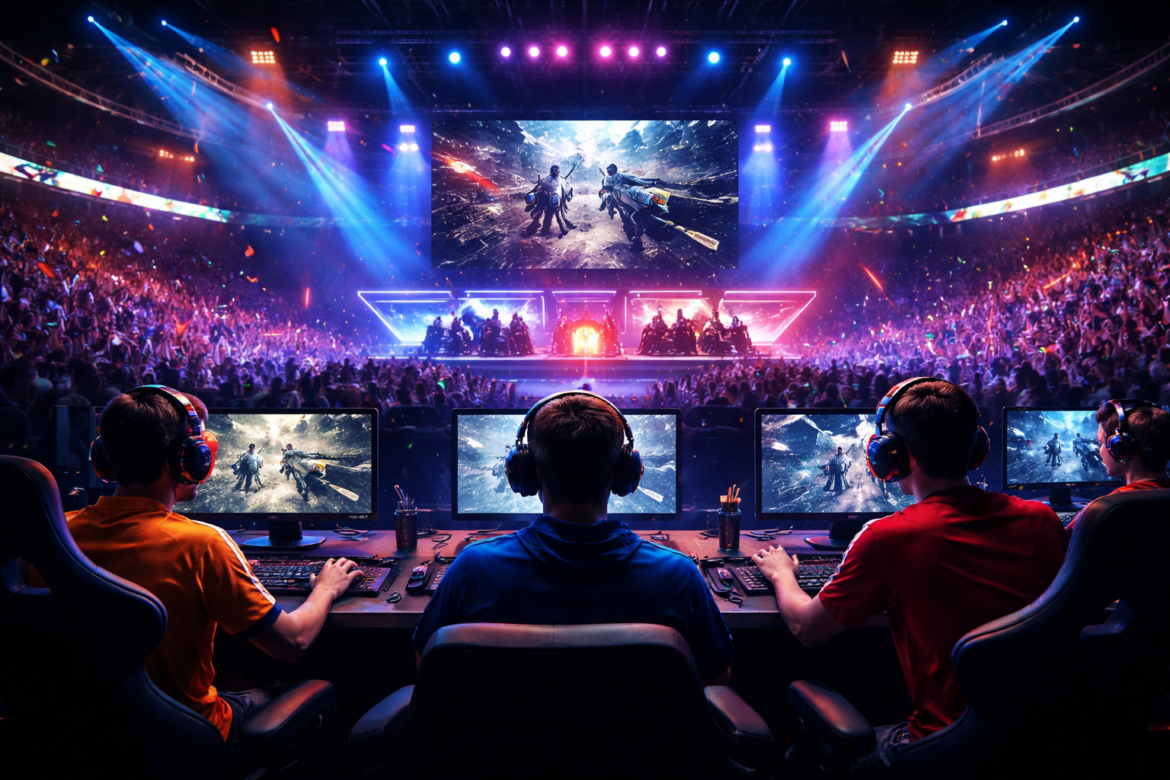
If you still think esports is just guys sitting around with headphones on, it’s time to take a look at the venture capital acquisition charts. In 2025, the discipline’s transformation into a high-margin business became completely evident, when multimillion-dollar deals between developers and media giants reached volumes comparable to traditional leagues. Tellingly, Riot Games’ decision to allow bookmaker sponsorships for VALORANT and League of Legends teams in the American and European regions was met with a wave of approval from analysts, who saw it as the only way to keep the teams afloat after the departure of aggressive tech investors. Playing on the edge is becoming the new norm in a world where every second of airtime costs tens of thousands.

The tactic of striking deals with direct beneficiaries (for example, gaming chair or energy drink manufacturers) is being supplemented by a new level—the introduction of revenue-sharing technology. That same year, Riot Games reported distributing over $100 million among VALORANT Champions Tour participants as direct payments from the in-game store. This was a huge boost for teams that previously couldn’t predict their budgets for the next quarter. Now, with a portion of the revenue from every in-game skin sold going to the league fund, team owners can rest easy knowing that even with a disappointing performance in the tournament bracket, their basic expenses will be covered. This shift from a “winner-take-all” model to a “survive together” model could become a lifeline for the entire industry.

An equally significant driver of profits are the colossal prize pools, incomparable to those of five years ago. Counter-Strike, League of Legends, and even the exotic Rocket League delight viewers with multi-million dollar prize pools: the 2025 RLCS World Championship alone offered participants $12 million, $300,000 of which went to the champion. That same year’s Esports World Cup tournament generated a whopping $1 million in prize money for seventeen teams, despite the gap between first and last place still being enormous: first-place KC took home $400,000, while fourth-place KC settled for $60,000. Nevertheless, the sheer size of the prize money fuels viewer interest and compels traditional sports media to pay attention.

Pages: 1 2

advertisement

For a long time, esports was associated exclusively with male teams playing in the basements of esports arenas. But 2025 has completely shattered this stereotype. The influx of female audiences and inclusive initiatives has become one of the main drivers of growth. The showcase project “The Lobby League,” organized by Guild Esports in partnership with Sky Broadband, not only hosted a series of tournaments with a fifty-thousand-pound prize pool but also awarded contracts to the winners and free high-speed internet access for two years. For many young talents, this became a stepping stone into a sport previously dominated exclusively by male teams.

The diversity of formats in 2025 is astounding. In addition to large-scale competitions, such as the prize pool for VALORANT Women & Non-Binary Winter, there are local events with prize pools starting at £150, which nonetheless serve an important educational function. Game Changers leagues, such as BEACON Series 2, offer direct entry into professional EMEA competitions, making the path from amateur to pro as transparent and clear as possible. This creates an environment where a talented girl from Birmingham or Leeds has a real chance to reach the global stage, bypassing the toxic community of public ranked games.

Alongside this gender breakthrough, the mobile gaming phenomenon is gaining momentum. Contrary to the opinions of PC snobs, smartphone competitions in games like PUBG Mobile or Mobile Legends fill stadiums around the world, with prize pools exceeding millions of dollars. Revenues in this sector are estimated at nineteen billion dollars, and analysts predict further explosive growth thanks to the global spread of affordable smartphones with good graphics. The success of the mobile branch is easily explained: you don’t need an expensive computer to play, opening up esports to entire countries in Africa, South America, and Asia where such a thing was previously a luxury.

Pages: 1 2

advertisement

On November 11, 2026, when the world’s best CS:GO teams meet at the IEM Cologne Major, viewers will witness something that seemed like science fiction just a couple of years ago. In the third stage of the tournament, for the first time in history, the shooter will completely abandon short best-of-one (BO1) series, replacing them with full-length best-of-three (BO3) series, requiring an entire day to be added to the schedule. This significant format change was necessary to implement cutting-edge AI-powered real-time analysis systems that scan every player’s movement, from camera rotation speed to the cost-effectiveness of every weapon purchase. Competitions are transformed into high-tech detective work, where a strategist spots an opponent’s mistake even before the player realizes their own.

Artificial intelligence has long been more than just a mentor for newcomers, but a fully-fledged member of the coaching staff. The specialized GameSkill platform, developed in collaboration with Intel, can analyze screen video feeds in real time, identify weak points in positioning, and provide voice prompts to players. Research conducted in 2025 shows that teams actively using such modules increase their win rates by an average of eight percent per season, which is a colossal advantage at the competitive level. Coaches no longer spend hours manually reviewing footage—the algorithm automatically highlights critical errors and suggests countermeasures based on a global database of millions of matches played.

Alongside the development of analytics, VR and AR are rapidly expanding. Traditional games are finding it increasingly difficult to impress audiences, and mixed reality competitions are entering the arena. In 2025, the organizers of the VALORANT Champions Tour pioneered augmented reality onstage at the Vietnamese tournament, projecting 3D maps and real-world statistics directly in front of spectators and players. The developers of EVA (Esports Virtual Arenas) took things even further, partnering with PICO XR to create free-roaming battle arenas. Now, spectators can put on a headset and virtually stand right over their idol’s shoulder, watching the match from the same vantage point as the athlete. This completely bridges the gap between online and offline viewing.

Pages: 1 2

advertisement

It seems that the life of a professional esports athlete consists of a string of victories, fan meetings, and luxury cars. Meanwhile, the reality of those who inhabit the training facilities of Team Liquid or Fnatic often seems like an endless series of fourteen-hour practices, meticulous replay analysis, and a complete denial of personal life. While ordinary people complain about their workload at the office, League of Legends players in 2025 are seriously discussing the critical mark of two thousand matches played per season, after which emotional collapse sets in. It’s striking that peak performance in this discipline occurs incredibly early, and the careers of many stars are cut short by the age of twenty due to nervous exhaustion, not aging reflexes.

The narrow specialization of young athletes is particularly alarming. Research confirms that academies and clubs prepare players as expendable, focusing exclusively on short-term results rather than long-term resilience. In pursuit of the top rankings, junior players spend years failing to master complementary roles, leaving them completely helpless when the game meta shifts or internal conflicts arise within the team. The Korean training model, where squads live like barracks, was copied by Western clubs, but along with its effectiveness, it brought mental health issues previously unknown to British players accustomed to a healthy balance.

The very structure of professional leagues contributes to burnout. One of the five main factors leading to burnout in League of Legends Championship Korea is the feeling of being trapped: as soon as a player takes a break, they immediately fall behind competitors who continue practicing around the clock. This fear creates permanent pressure, forcing athletes to push themselves to the limit for years, sacrificing sleep, nutrition, and interpersonal relationships. Even the legendary Faker, a four-time world champion and icon of the genre, openly shared how he consulted sports psychologists to avoid losing himself in a rut. His revelations helped legitimize the topic of mental health care in a community where it was previously embarrassing to admit to ordinary fatigue.

Pages: 1 2

advertisement

When spectators in the stands at Wembley Stadium chant “BLAST Open London” in honor of the Counter-Strike 2 final, and Wall Street investors discuss the stock prices of gaming holdings, the figures are so impressive they’re comparable to the budgets of small countries. According to analytics, the global esports market, valued at approximately $2.55 billion in 2025, is projected to grow to $7.25 billion by 2030, growing at an impressive 23% annually. It was against this backdrop that the Mayor of London stated in the fall of 2025 that hosting tournaments like BLAST Open boosts the capital’s economy by £30 million: tickets, hotels, transfers, and meals for thousands of fans make the competitions a powerful driver for small and medium-sized businesses. Behind the glare of the spotlight and exorbitant prize money, however, lies a complex, fragile industry, where funding winters alternate with mergers and acquisitions springs.

The main stumbling block for any professional team is the classic problem of a narrow business model. For a long time, most clubs existed solely on sponsorship contracts and prize money, making them like fragile tech startups that needed to be sold to investors without ever reaching a stable breakeven point. However, the situation is changing dramatically: game developers are beginning to directly share revenue with league participants. A prime example is 2025, when Riot Games paid VALORANT Champions Tour teams over $100 million as a direct share of skin sales and media rights. This move proved a lifesaver for many teams that had faltered during the “industrial winter,” when outside investment dried up and roster costs continued to rise.

In the search for stability, organizations are learning to diversify risks. The leadership of Rocket League champion Karmine Corp is banking not only on tournament victories but also on extensive merchandise, content for its own academy, and hosting home LAN events. Sponsors, in turn, are also evolving: following in the footsteps of peripheral and energy drink manufacturers, betting companies are entering the industry. In mid-2025, Riot Games officially authorized partnerships with licensed betting brands for top League of Legends and VALORANT teams, clarifying, however, that there will be no direct advertising on jerseys or during broadcasts. This delicate balancing act between morality and commerce symbolizes the maturation of an entire entertainment sector.

Pages: 1 2

advertisement

Newer Posts