
Category:

Motivation

advertisement

The most powerful motivation is useless if you can’t take the first step. The problem isn’t a lack of desire—everyone has desire. The problem is the gap between intention and action. This gap is filled by fear, doubt, and procrastination. But neuroscientists have discovered a surprising phenomenon: if you manage to initiate an action within five seconds of thinking about it, your chances of following through increase exponentially. This is the so-called “five-second rule,” coined by American TV host Mel Robbins and later confirmed by research. When you silently count “5-4-3-2-1” and immediately move, you trick your brain, preventing it from activating its defense mechanisms. Counting is a distraction that breaks you out of analysis paralysis.

How can this be applied in real life, for example, in sports? Imagine you’re lying on the couch after work, knowing you need to get dressed and go for a run, but your body won’t listen. Start a countdown: five… four… three… two… one… and get up. Without thinking, head to the closet and put on your sneakers. By the time you tie your laces, the critical window has passed—you’re already in the process, and it’s easier for your brain to agree to continue than to fight it. The same goes for cleaning, a difficult conversation, paying bills—any task that provokes internal resistance. The five-second rule doesn’t make the task enjoyable, but it does make it automatic, eliminating the agonizing hesitation.

For the British mentality, with its famous politeness and fear of seeming intrusive, this rule is especially valuable in social situations. Want to invite a colleague for coffee but are afraid of being rejected? Count to five and begin the sentence, not giving yourself time to imagine catastrophic scenarios. Want to join a gym but feel self-conscious about your form? Five seconds and you’ve already dialed the number. The paradox is that anxiety is usually stronger than the event itself. As soon as the action is initiated, the brain switches from “what if?” to “how can I solve this problem right now?” And it almost always turns out that the fears were greatly exaggerated.


Pages: 1 2

advertisement

Washing dishes, folding clothes, dusting—these tasks are so routine that our brain automatically labels them as “a waste of time.” And this is despite the fact that they make up 80% of our daily routine. It’s a paradox: we dream of great accomplishments, yet stumble over a mountain of dirty dishes in the sink. However, psychologists claim that any routine task can be transformed into a source of pleasure and even inspiration by adding an element of mindfulness and… theatricality. The key word here is “ritual.” A ritual differs from a routine in that it is imbued with meaning, which you give it yourself.

Let’s use washing dishes as an example. The usual approach: get up, turn on the water, quickly lather, rinse, dry. All of this is accompanied by irritation: “Why are there so many dishes?” Alternative: light an aromatic candle (cheap but pleasant), place your phone on the windowsill with meditative music or a podcast playing. You lather each plate slowly and with feeling, noticing the texture of the lather, the warmth of the water, the shine of the cleaned surface. You don’t try to finish quickly—you live these ten minutes as an act of caring for yourself and your home. Surprisingly, in this mode, there’s no urge to give up halfway through. Moreover, the best ideas often come during this process—because your conscious mind is in a light trance, and your subconscious is working at full capacity.

For those living in the UK, with its tradition of “quiet hour” and love of rituals (think of five o’clock tea), this approach is especially relatable. We already know that a beautiful ceremony changes the perception of a simple action. Why not apply this to cleaning? Buy yourself a special apron for housework—a beautiful one, perhaps embroidered. Get a separate cleaning cloth that feels good in your hands. Create a playlist that you only play while you’re cleaning—energizing but not annoying. Over time, your brain will begin to associate these external stimuli with a pleasant flow state. And even if you don’t feel like starting at first, just put on your favorite apron and turn on some music—and the process will begin naturally.

Pages: 1 2

advertisement

“I hate running. Every time I try to start, my knees hurt, I get out of breath, and I feel like a clumsy hippopotamus.” Sound familiar? That’s your brain trying to conserve energy and avoid discomfort at all costs. But the truth is, the problem isn’t you or the exercise—it’s the gap between effort and reward. Running, swimming, and strength training don’t produce immediate results. You won’t see toned muscles after your first trip to the gym, or lose a stone in one run. But your brain needs the here and now. So how can you trick it and make it enjoy movement? The answer lies in dopamine anchors and shifting your focus from “how hard this is” to “how awesome it will be after just 10 minutes.”

Let’s start with the most important thing: never force yourself to run long and fast from the start. Use the “lazy intervals” technique: 30 seconds of very slow jogging or even brisk walking, followed by 1 minute of leisurely walking. Repeat 5-6 times. Why does this magically reduce aversion? Because you never push yourself to the point of “I’m out of breath and want to die.” You stay in a zone of mild discomfort that your brain doesn’t yet classify as a threat. Gradually, week after week, you increase your work intervals and shorten your breaks. And one day, you realize you’ve run for 20 minutes without stopping—and it didn’t feel like hell. The secret isn’t willpower, but bypassing the fear system through a back door.

In British weather, where rain and wind are common, motivation for outdoor workouts is especially fragile. So on rainy days, give yourself permission to try something different. Home workouts aren’t a compromise, but a complete replacement. There are hundreds of free YouTube programs from British trainers (e.g., Joe Wicks, The Body Coach) that last 15-20 minutes and require no equipment. Jumping jacks, squats, burpees—all of these can be done in the living room while the kettle boils. Make a rule: if it’s pouring rain, don’t cancel your workout, but replace it with a short session at home. Better 15 minutes at home than zero minutes outside. Perfectionism kills progress, while small victories build habits.

Pages: 1 2

advertisement

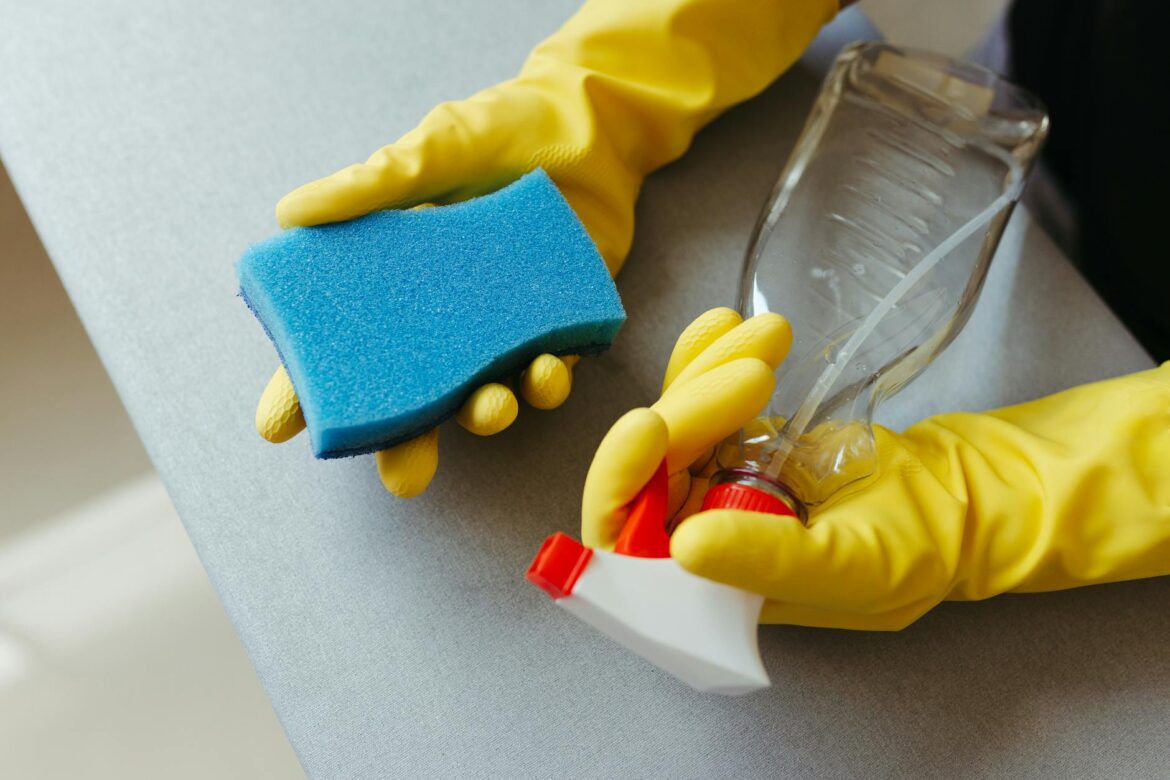
If the word “cleaning” makes you feel lazy and want to crawl under the covers, you’re not alone. For many Brits juggling work, family, and personal time, the thought of spending the weekend with a duster and vacuum cleaner seems like a death sentence. But what if I told you that you can keep your home in perfect order by spending just fifteen minutes a day? And it’s not magic or a miracle cure. It’s a technique psychologists call the “Pomodoro Technique” for household chores. You choose one small area—a desk drawer, a cupboard shelf, the kitchen sink—and devote exactly fifteen minutes to it. No distractions, no phone, no multitasking. Use a timer.

Why does this work better than the traditional “everything at once” approach? Because the volume is daunting, while a small section isn’t. Spring cleaning presupposes chaos: you take things out of closets, move furniture, and at some point it seems like the mess has only gotten worse. This is demotivating and kills enthusiasm. The “15-minute” method, however, exploits the effect of gestalt completion. When the timer goes off, you stop, even if you’re not finished. Paradoxically, this relieves resistance: you know the ordeal won’t last forever. And often, once you start, you get hooked and continue by your own volition, because you see the result—a clean corner that pleases the eye.

How can you implement this system if you live in a small apartment in London or a house with a garden in Kent? The secret is rotation. Make a list of 10-15 micro-zones in your home: a bookshelf, a shoe cabinet, a refrigerator, the area under the sink, windowsills. Choose one zone each day, based on your mood, or alternate between them. Monday: declutter the desk, Tuesday: dust the radiators, Wednesday: sort socks. You’ll be amazed how each part of your home gets its share of attention over the course of a month, and you’ll never feel overwhelmed by a wave of cleaning aversion. And most importantly, you’ll stop feeling guilty about “not getting everything done.” Because everyone has fifteen minutes, even the busiest surgeon or mom on maternity leave.

Pages: 1 2

advertisement

Have you ever noticed how difficult it is to get out of bed when the sky is gray and drizzling outside? Your alarm went off ten minutes ago, and you’re still lying there, mentally going over a to-do list that seems overwhelming. The secret to morning energy isn’t iron willpower or gallons of coffee. It’s a small, almost imperceptible ritual that psychologists call a “five-minute victory.” It’s about performing one simple but concrete action immediately after waking up that will break the chain of procrastination. You don’t need to plan an hour-long workout or a thorough cleaning—just make your bed, drink a glass of water with lemon, or take five deep breaths. This micro-action sends the signal to your brain: “I’m in control, the morning has begun.”

Why does this work from a neurobiological perspective? Our brain is inherently lazy: it strives to conserve energy and avoid uncertainty. When you wake up and immediately grab your phone, you’re entering a passive mode of information consumption, which only heightens the sense of chaos. But as soon as you perform a physical action requiring minimal effort, a chain reaction is triggered in the prefrontal cortex. Dopamine, the reward hormone that gives us a sense of satisfaction from completing a task, even a small one, is released. And this feeling pushes you to the next small step: perhaps today you’ll not only make your bed but also take out the trash, and tomorrow you’ll decide to do some light exercise.

This strategy is especially relevant for those working from home, which has become commonplace for many residents of Manchester, Bristol, and Glasgow. When your workspace is two meters from your bedroom, the boundaries between rest and work blur. Your morning ritual becomes an anchor separating sleep from wakefulness. Try introducing a “no screens for the first half hour” rule. Instead of checking email or scrolling through social media, dedicate this time to yourself: take a contrast shower, cook a nutritious breakfast, or simply sit with a cup of tea and look out the window. You’ll be surprised, but even ten minutes of quiet time without digital noise can dramatically change your emotional outlook for the entire day.

Pages: 1 2

advertisement