
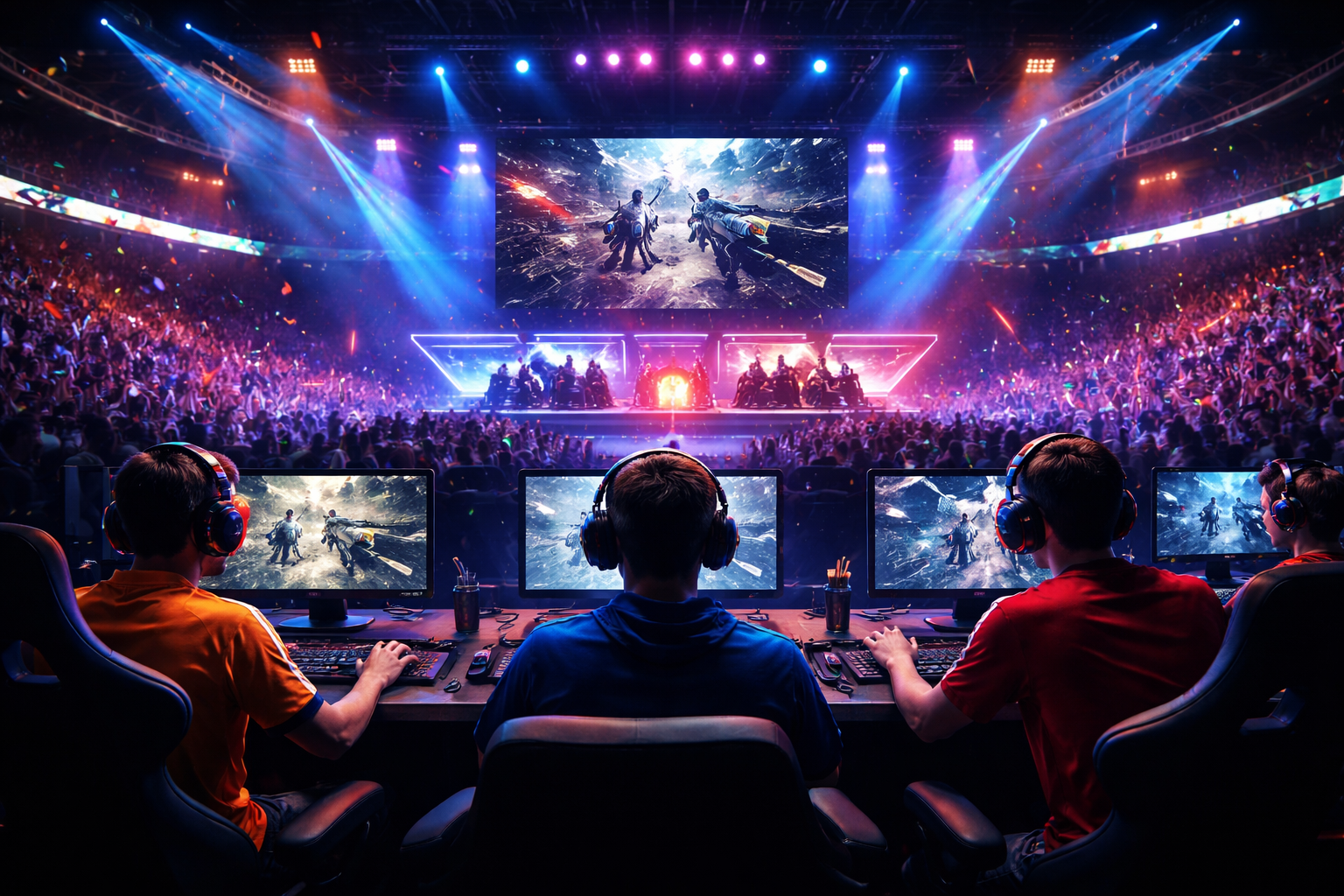
The economic impact of hosting major tournaments for host cities deserves special mention. When the BLAST Open London, with a prize pool of $330,000, was held at the legendary Wembley Stadium, the capital’s mayor proudly announced a £30 million boost to the local economy. Foreign fans, renting hotels, spending money in pubs, and on transport, create jobs and replenish budgets. This is no longer a “crowd of geeks,” but an organized audience with a high average spend, which the authorities want to attract again and again. Thus, esports is beginning to compete for sports arenas with traditional football and rugby matches, dictating new conditions for municipal authorities.
In the business context, the development of student leagues, which are becoming a breeding ground for future stars, cannot be ignored. In the UK, for example, programs associated with the EFL (English Football League) are actively funded, where young people are taught proper internet use and digital hygiene through gaming. These initiatives are supported by a government grant, which is already fundamentally addressing the problem of social mobility for talented young people from disadvantaged areas. While it’s a sport, it’s also a method of socialization, and investments in this sector quickly pay off by cultivating a loyal audience for premium products.
While traditional Premier League clubs are only just considering creating their own esports branches, global titans like Team Liquid have long since transformed analytics dashboards into a fully-fledged product that can be sold through franchises. Their experience implementing SAP and AI systems to predict match outcomes based on player micro-movements allows them to bet on their own teams’ performances, monetizing even the training process. This depth of data processing makes teams attractive to high-tech partners: the transition from simple joysticks to complex infrastructure is the key to the longevity of this form of entertainment.
In short, today’s esports is a complex conglomerate of investments, passions, and strategic planning. Behind the flashy veneer of broadcasts lies a massive machine that is learning to generate revenue on its own, without perpetual subsidies from publishers. The success of this initiative will determine whether our children will watch the Dota 2 World Finals in 2030 with the same awe as the Super Bowl. And if sponsors and governments continue to invest in infrastructure, this long-distance race will be won.