
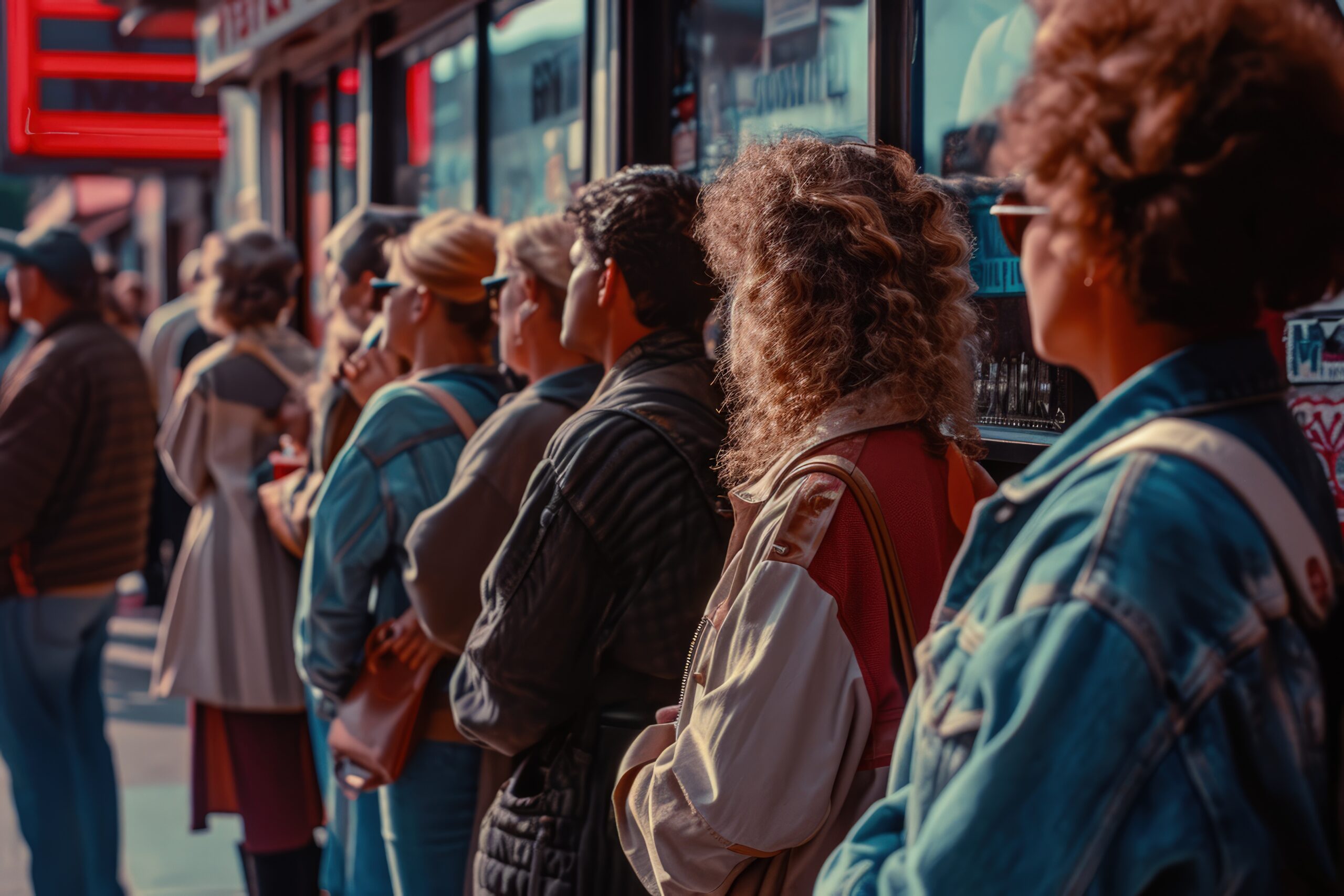
A special phenomenon is the phenomenon of “fan queues”—for example, before a film premiere or concert. Here, waiting transforms from a necessity into a social event. People bring chairs and thermoses, play board games, and make new acquaintances. For many, it’s a way to meet like-minded people and feel part of a community. Anthropologists note that such queues provide that “third place” we discussed earlier—a space where you can be yourself without obligations. It’s no surprise that some regulars complain when organizers speed up the process: “We came not just for the ticket, but also for the atmosphere.” In this sense, the British queue retains the characteristics of a fairground.
In the digital age, the concept of a queue is being transformed. Virtual waiting lists, online registration, and vouchers—all of this is killing the physical queue, but it doesn’t eliminate the need for a fair order. We still get angry when “the system issued a voucher after us, but someone else got served first.” And we feel similarly reassured when we see a timer: “Your wait is 15 minutes.” Some startups are even trying to monetize queues by selling space, but in Britain this sparks such moral outrage that such services are quickly shutting down. Queues, it seems, remain the last bastion where money can’t buy everything.
What does the future hold? Physical queues likely won’t disappear, but they will become less widespread. The younger generation, raised with the ability to order everything delivered to their door, is less tolerant of standing for the sake of standing. However, in times of crisis (pandemic, natural disasters), the British ability to wait with discipline can be a lifesaver. While others panic and push, we calmly take our places at the back, knowing the system works. This isn’t obedience, but the highest form of social responsibility. So the next time you’re standing in line at the post office, knowing the cashier has gone for a smoke break, remember: you’re not just wasting time. You’re maintaining the delicate balance of order and fairness on which British society is built. And maybe you’ll smile.