
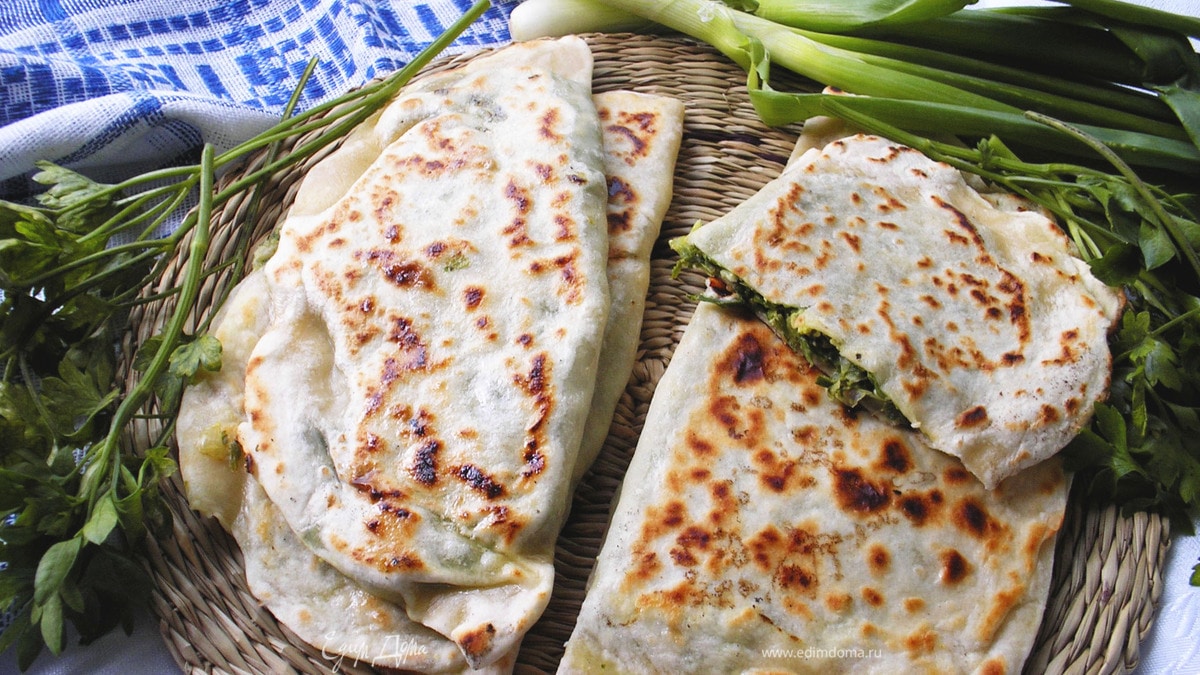
Do you ever find yourself in a situation where the fridge seems completely empty in the evening, and you have neither the energy nor the desire to go to the supermarket? The magic of the cuisines of the former Soviet Union comes to the rescue: Azerbaijani kutabs with potatoes. These thin, semi-circular flatbreads made of unleavened dough are made with ingredients that any British family always has in their pantry: flour, water, salt, butter, and a few potatoes. The result is so delicious and filling that an ordinary dinner turns into a gastronomic experience worthy of a restaurant. Kutabs are fried in a dry frying pan until golden brown and then generously brushed with melted butter—that’s their secret.
The secret to the perfect kutabs dough lies in the right consistency. Dissolve salt in warm water and add a couple tablespoons of vegetable oil—this will make the dough pliable and prevent it from breaking during frying. Gradually add flour to the liquid, stirring constantly, until the dough no longer sticks to your hands. The finished dough should have the consistency of an earlobe—soft, elastic, but not sticky. After kneading, let it rest under plastic wrap for half an hour: during this time, the gluten swells and the dough becomes even more pliable. For busy amateur cooks, this is the perfect pause to chop vegetables or peel potatoes.
The filling for qutabs is a realm of minimalism and flavor. Potatoes are boiled in their skins or peeled until completely soft, then mashed with a knob of butter, black pepper, and—most importantly!—a generous amount of fried onions. The onion is finely diced and sautéed in vegetable oil until deep golden brown and begins to exude that recognizable “restaurant” aroma. Some chefs also recommend adding fresh herbs (dill, parsley, or green onions) and a few cloves of garlic pressed through a press. But even the simplest option—potatoes, onions, and oil—produces such a harmonious flavor that you don’t want to overpower it with additional ingredients.
The process of assembling the kutabs is somewhat reminiscent of making large dumplings or chebureki. The rested dough is divided into eight to ten equal parts, each of which is rolled out into a very thin circle about the diameter of a saucer. A tablespoon of potato filling is placed on one half of the circle, spreading it into a thin layer about half a centimeter thick, leaving about a half-centimeter from the edges. Then fold the flatbread in half and carefully pinch the edges, trying to squeeze out all the excess air. For extra security, you can run a fork along the edge or create a decorative seam—this will not only decorate the dish but also prevent it from falling apart during frying.