
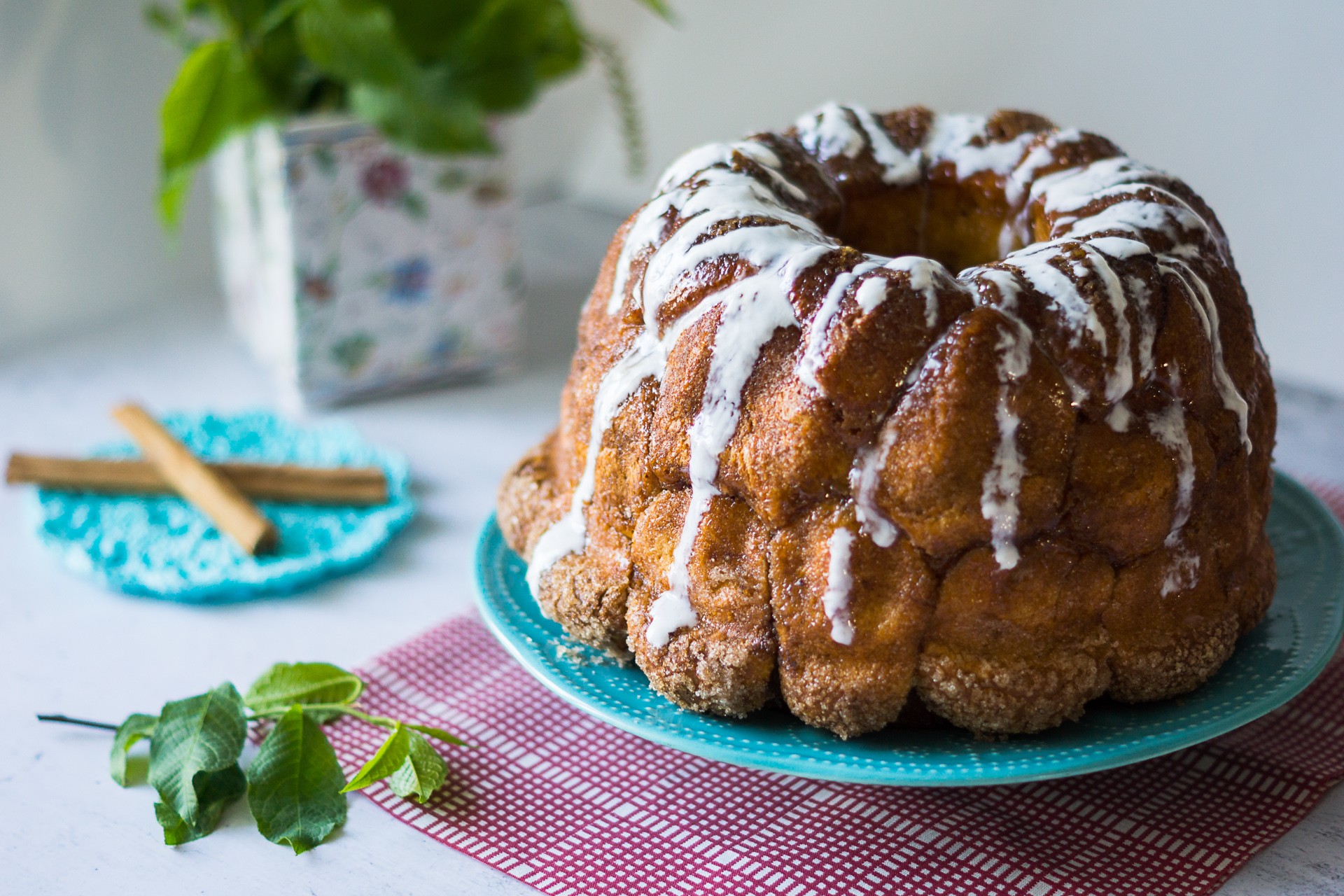
Forget strict pans and pizza cutters—today we’re making a pastry that’s best eaten with your hands, breaking off golden slices as you go. We’re talking about an incredible dessert called “Monkey Bread,” which originated in American home cooking but has already won the hearts of gourmets around the world. Despite the name, there’s nothing exotic about the ingredients: these are airy yeast dough buns stacked into a tall tower, drenched in caramel, butter, and aromatic cinnamon. Each piece of the pie remains incredibly soft on the inside, but is covered in a crisp, sugary crust that simply melts on the tongue. What was originally a joke among housewives trying to replicate the Eastern dessert has evolved into a cult recipe that now graces coffee shops from London to Edinburgh.
The fun begins with the assembly process. Unlike traditional pies, where the dough is layered, here, small balls of dough are dipped in melted butter and then generously coated in a mixture of brown sugar and ground cinnamon. Finely chopped walnuts or pecans are often added to the classic recipe, but for an autumnal twist, apples are best used: they are finely diced, lightly caramelized in a pan with lemon juice and sugar, and then mixed with the dough balls. This addition gives the pie a slight tartness and fruity juiciness that perfectly balances the dense sweetness of the caramel. Experts recommend choosing sweet and tart varieties, such as Bramley, as they don’t fall apart when heated and hold their shape even after a long simmer in the oven.
The kneading process itself is very patient and almost meditative. For the dough, you’ll need warm milk, a couple of tablespoons of sugar, dry yeast, and half the flour. This mixture should sit for about fifteen minutes to activate the yeast. Then add the remaining flour, an egg, soft butter, and a pinch of salt. The dough is kneaded for at least ten minutes until it’s completely elastic—it should be as soft as an earlobe. After this, the future “Monkey Bread” is left to rise in a warm place, covered with a towel. The beauty of this hobby is that it can easily be combined with everyday activities: while the dough is fermenting, you can cook dinner, catch up on mail, or just have some tea.