
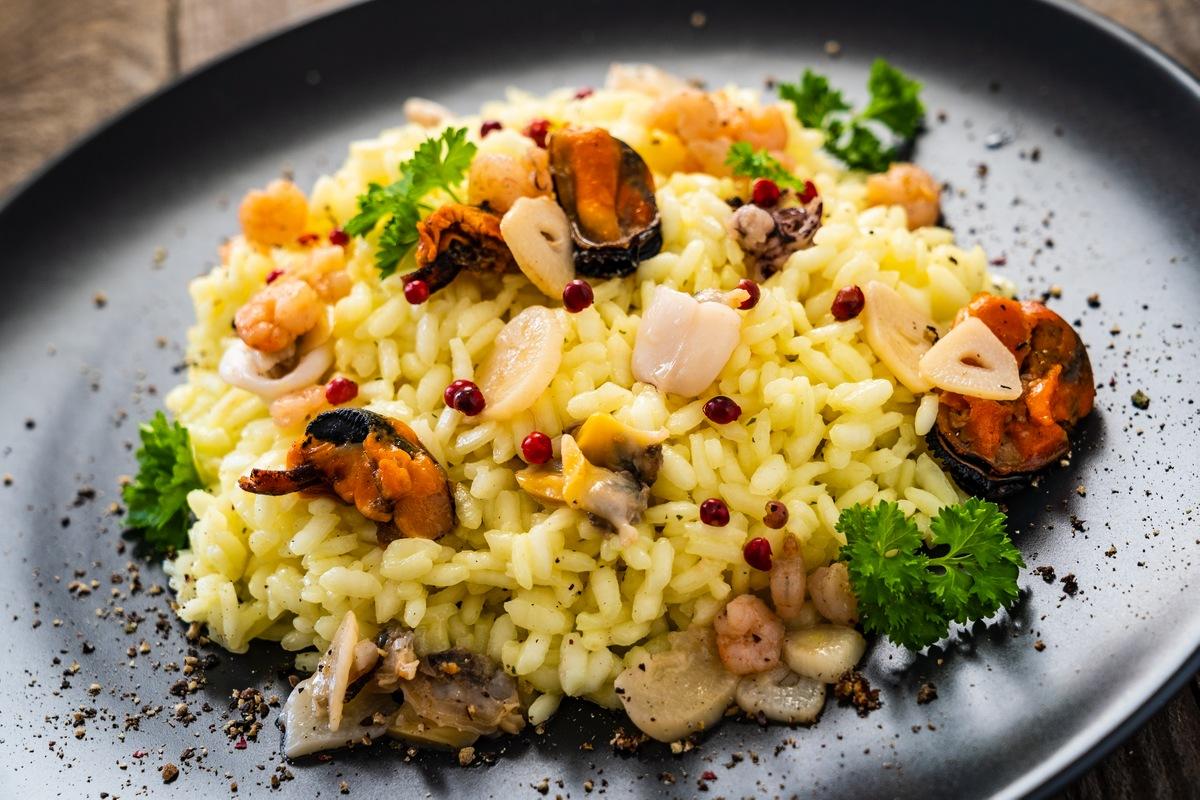
Traditional Uzbek lamb pilaf is undoubtedly a cult dish, but why not reimagine it? The idea of combining fluffy rice with the aroma of the sea seems blasphemous only at first glance. In fact, seafood pilaf exists in several cuisines around the world, from Spanish paella to Indonesian nasi goreng. And each time, it creates a completely new, self-contained dish that surpasses its meat counterpart in its lightness and elegance. For the British Isles, surrounded by water, this recipe makes perfect sense: we have access to fresh fish and shellfish, so why not use them in the familiar and beloved pilaf format?
The most important thing to understand before you begin cooking: seafood does not tolerate prolonged cooking. While lamb needs to simmer for hours to become tender, shrimp or mussels are ready in just 3-5 minutes. Therefore, the technique changes: first, fry the onions and carrots, cut into long strips, in hot oil (preferably a mixture of vegetable oil and ghee for a creamy flavor) until golden brown. Then add the prepared seafood—king prawns, peeled mussels, squid rings, and perhaps some white fish. Fry for no more than two minutes, stirring constantly, until they develop a crust but remain juicy inside.
Next, add the well-washed rice (preferably long-grain jasmine or basmati) to a cauldron or deep frying pan. Add boiling water to cover the rice by two fingers, and season with spices. Classic pilaf retains cumin, barberry, and turmeric (for color), but these are complemented by saffron for a sophisticated aroma, a pinch of paprika for sweetness, and, most importantly, lemon zest. Lemon zest and fresh garlic, pierced into the rice, work wonders: they remove any possible fishy odor, add a frosty freshness, and highlight the natural sweetness of the shellfish. Some chefs also recommend adding half a glass of dry white wine to the broth—as it evaporates, it will preserve the fruity notes in the rice.