
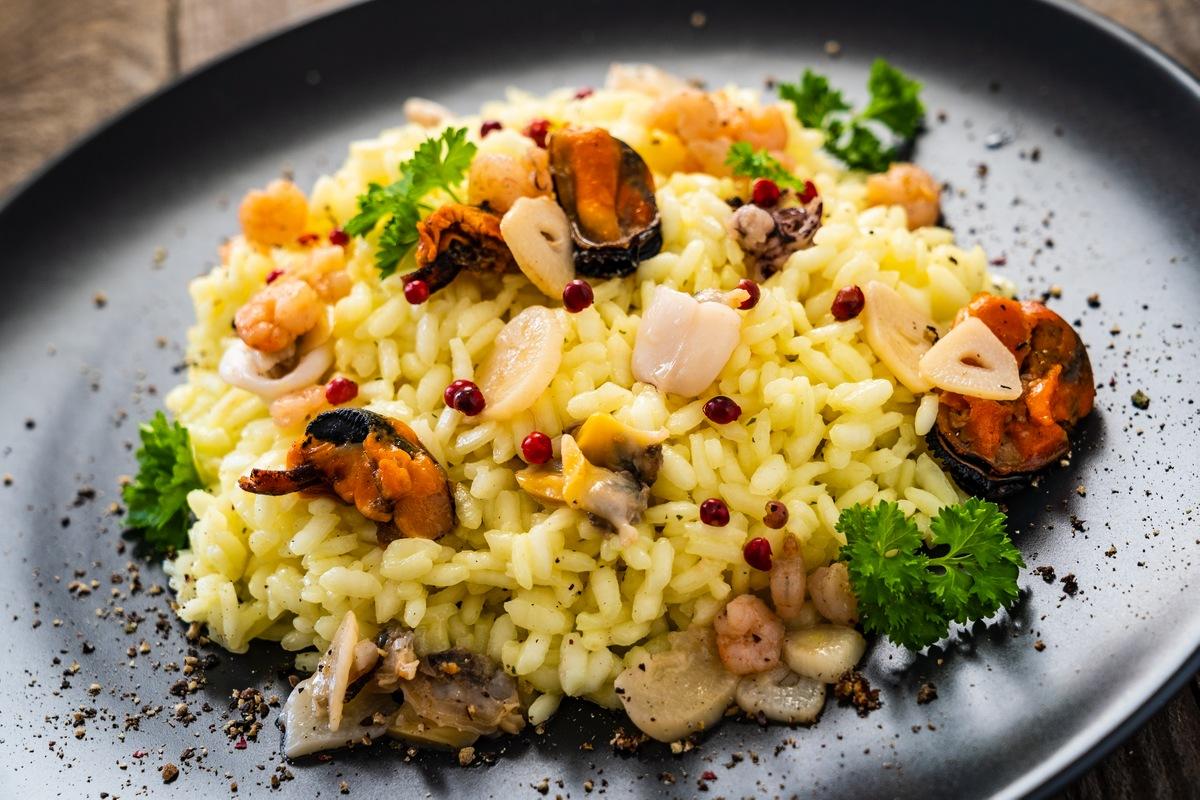
Simmer this pilaf under a tight-fitting lid for just enough time for the rice to absorb all the liquid—usually no more than 20-25 minutes over low heat. Never stir the rice during cooking, otherwise it will release starch and turn into a sticky mush. After turning off the heat, be sure to let the pilaf sit, covered, for another 10-15 minutes to allow the flavors to fully meld. Some recipes call for a pat of butter to be added to the rice during this time; it melts and spreads, giving the finished dish an incredibly silky texture. Before serving, gently stir the seafood pilaf, being careful not to break the tender pieces of squid or shrimp.
This dish is best served in individual portions, in deep bowls, generously sprinkled with fresh herbs such as dill, parsley, and green onions. A slice of lemon, which everyone can squeeze just before eating for an extra tart flavor, is also a wonderful accompaniment. Surprisingly, this pilaf is also delicious served cold: the cooled rice retains its fluffy texture, and the seafood will soak up the butter, turning into a savory appetizer. Unlike its heavy meat counterpart, this version doesn’t leave a heavy feeling in your stomach and is perfect for a summer lunch or dinner on the outdoor veranda.
If you want to impress friends who “don’t eat pilaf,” offer them this version. Bright carrots, golden turmeric rice, glossy squid rings, and delicate pink shrimp look so appetizing that guests will be reaching for more. What’s more, this recipe lends itself perfectly to modification: instead of seafood cocktail, you can use only salmon, cut into large chunks, or even whole rapana. And if you want to add a touch of spice, add finely chopped chili pepper and ginger to the oil before frying – this will give the dish an Asian twist. Either way, this recipe proves the old adage: classics are meant to be reimagined.