
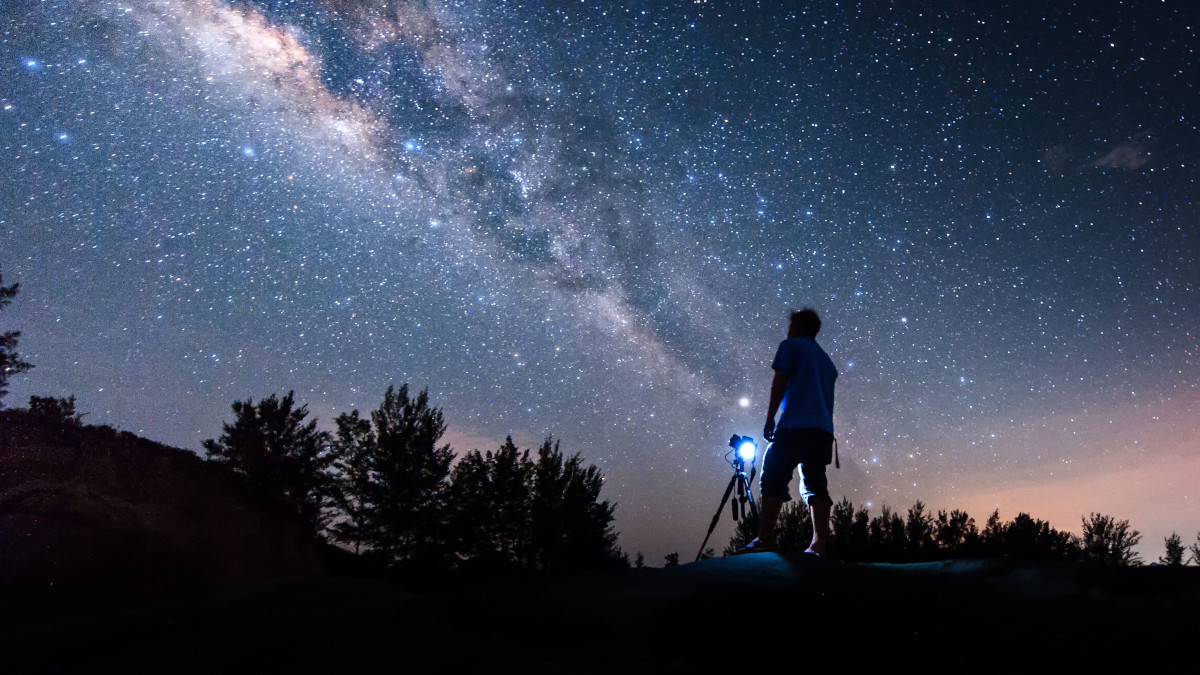
However, the real magic begins when you take your telescope to a real dark park. Just an hour’s drive from London, there are designated Dark Sky Reserves, such as those in Sussex or the Isle of Wight. There, the Milky Way appears as a silvery river, and your gaze is lost in thousands of stars invisible from the city. Many amateurs form groups for such trips, renting minivans and sharing the gas costs. “Meteor parties” are especially popular during the peak seasons of the Perseids (August) or Geminid meteor showers (December). You lie on a blanket with a hot chocolate, head up, and count the shooting stars, many of which leave bright trails lasting a few seconds. At such moments, you feel not like a resident of a rainy island, but a citizen of the universe.
For those who prefer solitary observations or are unable to get out of town, there is an alternative: EAA (Electronically Assisted Astronomy). You connect an inexpensive camera to a telescope and stream the image to a laptop or tablet. The camera accumulates light for several seconds, revealing colors and details that the human eye would never see in real time. The Orion Nebula turns pink, the Andromeda Galaxy a shimmering spiral vortex, all from the balcony of a Bristol apartment building. Of course, many purists will say this isn’t “real,” but astronomy isn’t a competition, it’s a way to marvel. If you took a deep breath when you saw Io cast its shadow on Jupiter’s surface—whether through an eyepiece or on a screen—it doesn’t matter.
Ultimately, by stargazing, we engage in the most human of all hobbies—we seek our place in infinity.